Openloop: Personal AI Loop Runtime
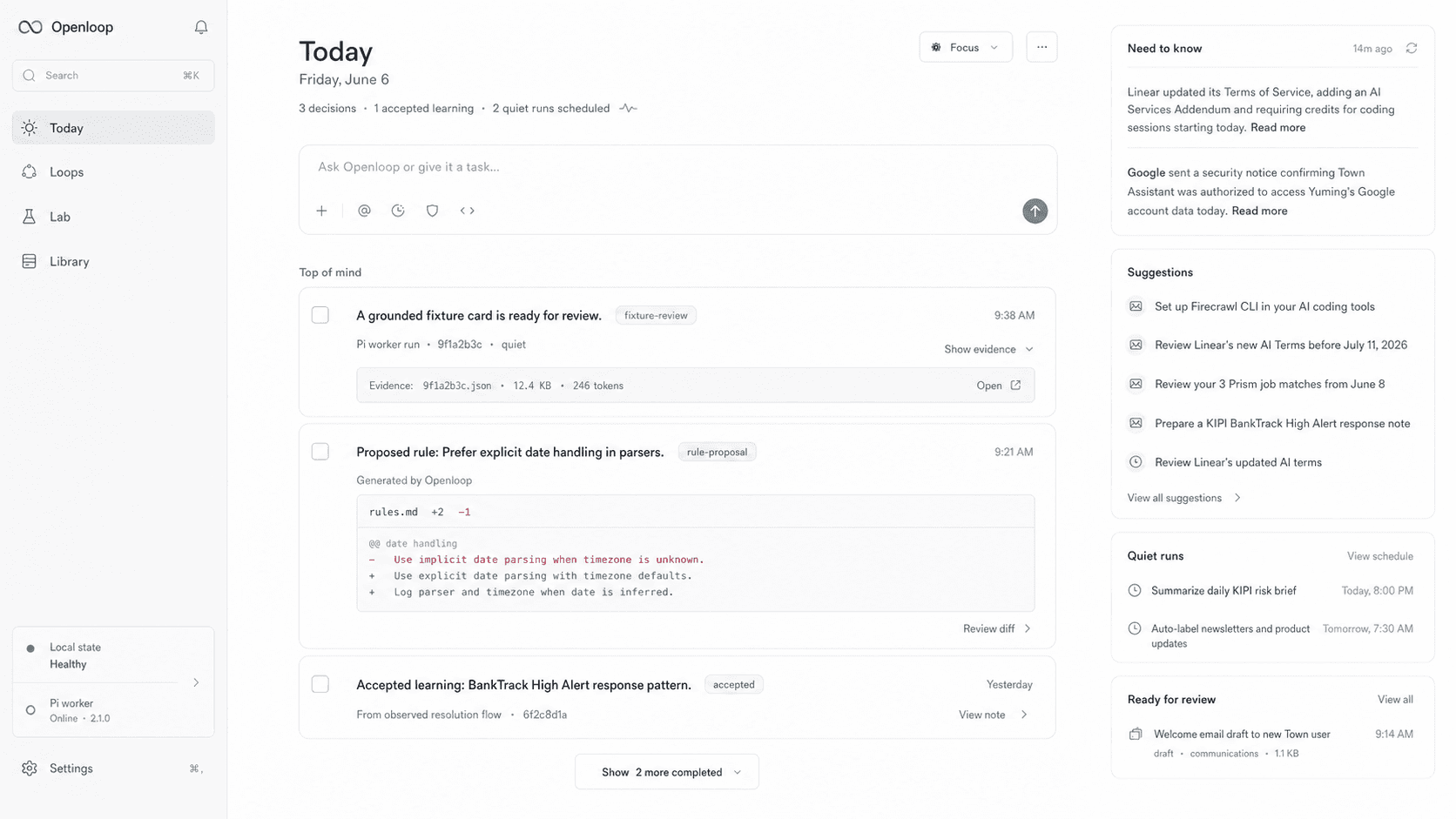
In Progress- ▸Thesis: Claude Code taught developers to write loops for code. Openloop is loops for everything else: email, reading, research, thought capture, and the recurring judgments that should not live in a chat thread.
- ▸Product: Not a workflow canvas, not a chatbot, not an ops dashboard. The unit is the loop: versioned files, scheduled runs, typed artifacts, judge results, verdict history, action receipts, and trust state.
- ▸Learning: Today is the daily decision stream. Approve, skip, edit, or type one correction; accepted corrections become visible
rules.mddiffs, gold cases, agreement signals, or receipts, so the loop gets less annoying over time. - ▸Architecture: Local-state-first Electron app with files and SQLite as source of truth. Pi runs behind an authority process: it can reason and request tools, but it cannot own credentials, widen permissions, or mutate durable loop state directly.
- ▸Problem: Running 3+ AI coding sessions creates real switching cost. Every terminal looks similar, and finding the right Claude Code or Codex thread by scanning panes breaks focus.
- ▸Solution: A native Spotlight-style command palette for searching live and historical agent sessions, previewing recent context, jumping back into live work, or starting a fresh Claude/Codex session from one surface.
- ▸How: Built as a local macOS app with Swift/AppKit, a global hotkey, session-file indexing, fuzzy search, transcript previews, and local-only reads from
~/.claudeand~/.codex. - ▸Status: Open source with GitHub Releases, Homebrew cask install, DMG packaging, bilingual README, and a public promo/demo video.
- ▸Problem: Codex power users often leave their desk with a fully loaded desktop thread, then lose momentum because mobile follow-up means re-explaining context from scratch.
- ▸Product model: A Desktop/CLI to WeChat handoff bridge: carry the current Codex context into WeChat, continue from the phone, then pull the mobile transcript back into the desktop workflow.
- ▸How: Local daemon, personal WeChat iLink QR setup, project allowlist, read/write/full-access modes, finish-run notifications, rich media handling, and a Codex skill that maps natural language to the right CLI commands.
- ▸Validation: Productized for public install with onboarding, docs, release notes, security model, 86 Bun tests, 421 assertions, and public installer smoke tests.
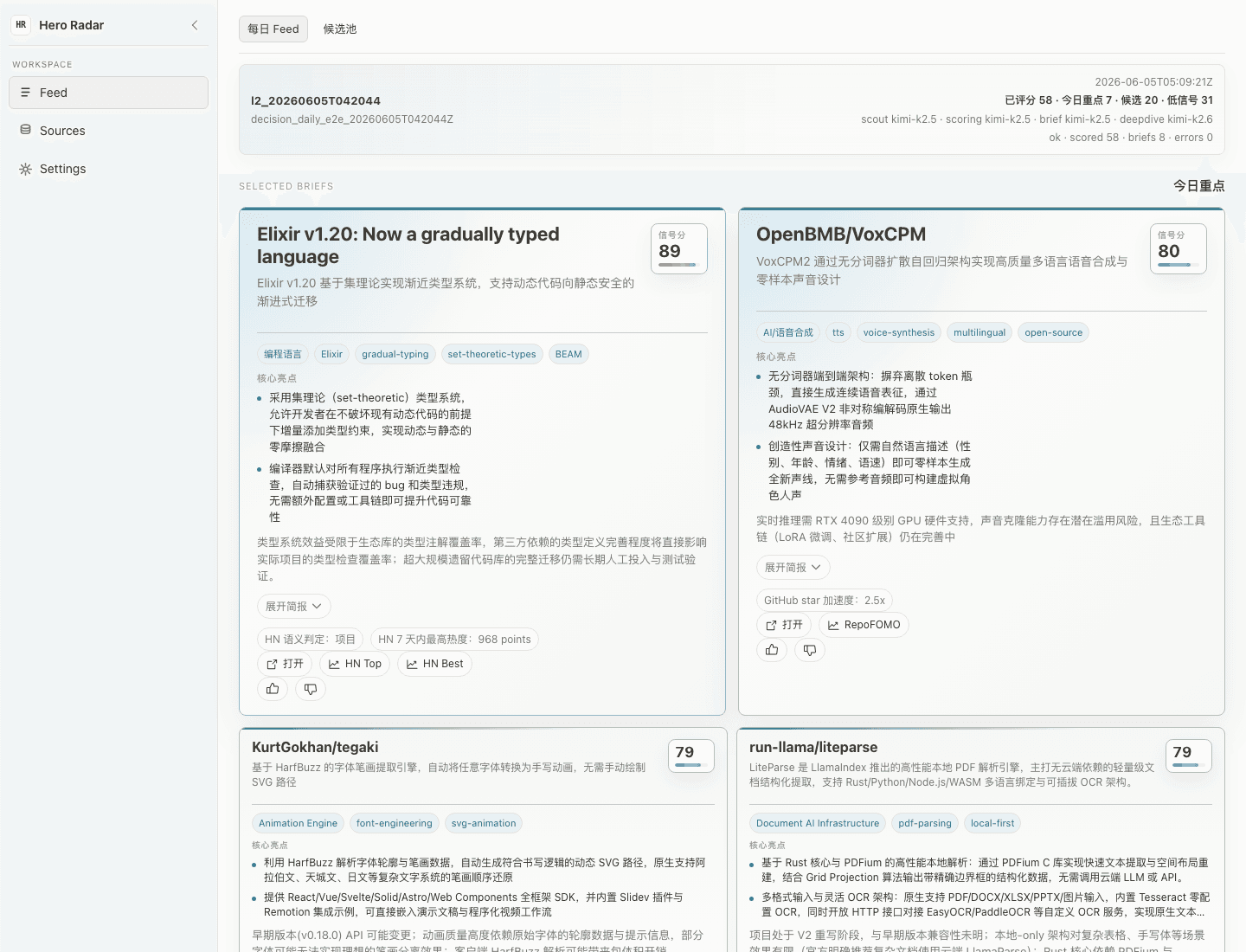
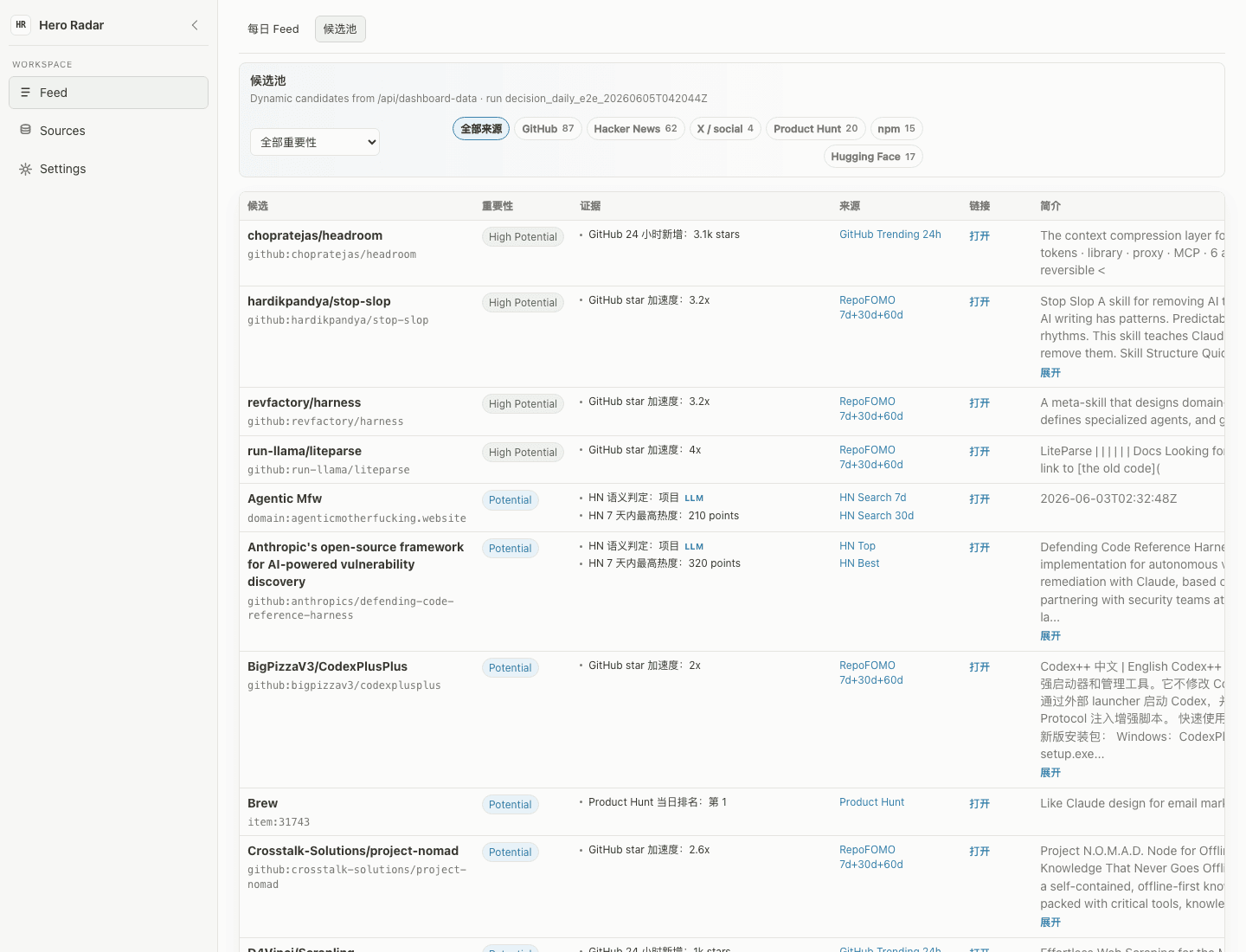
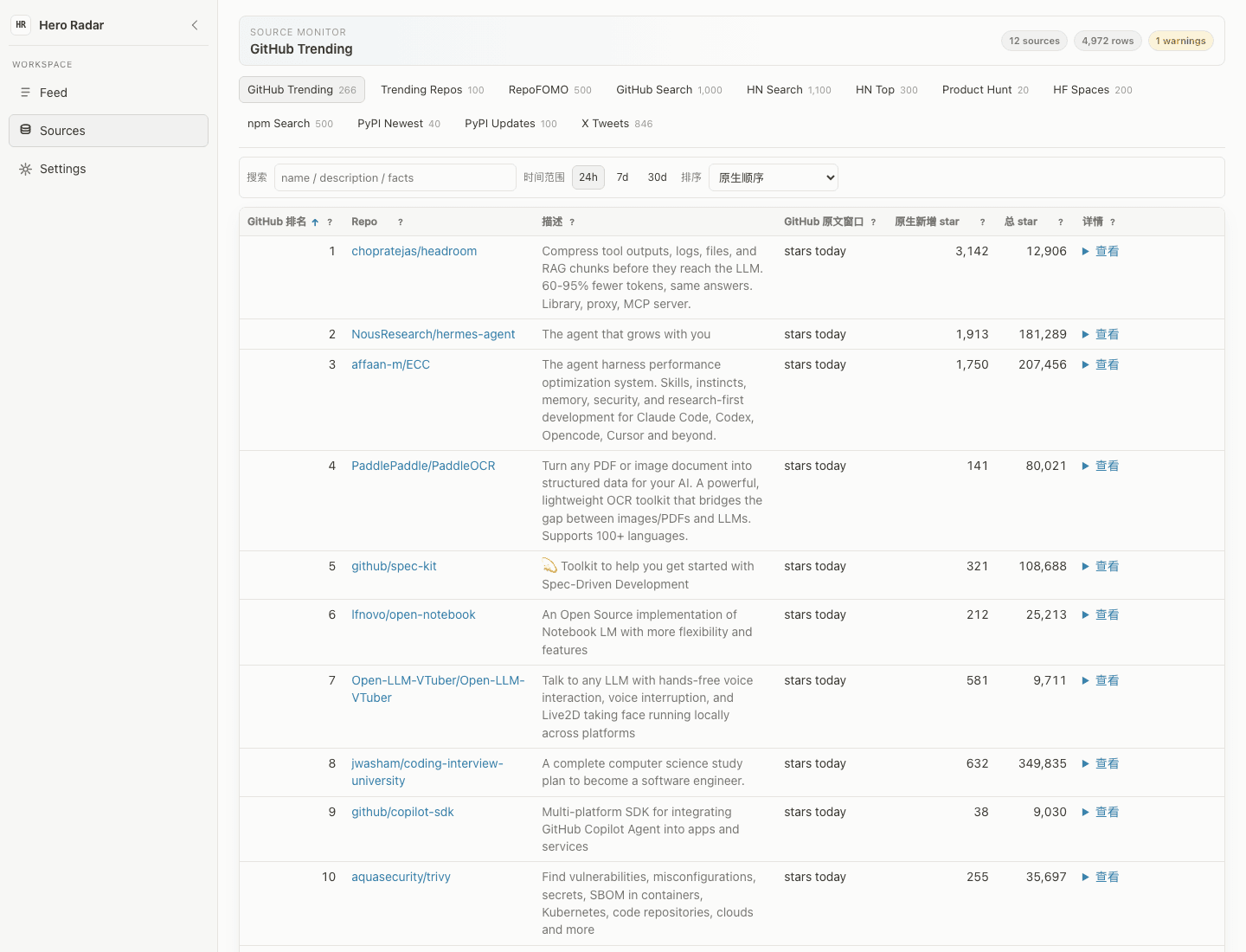
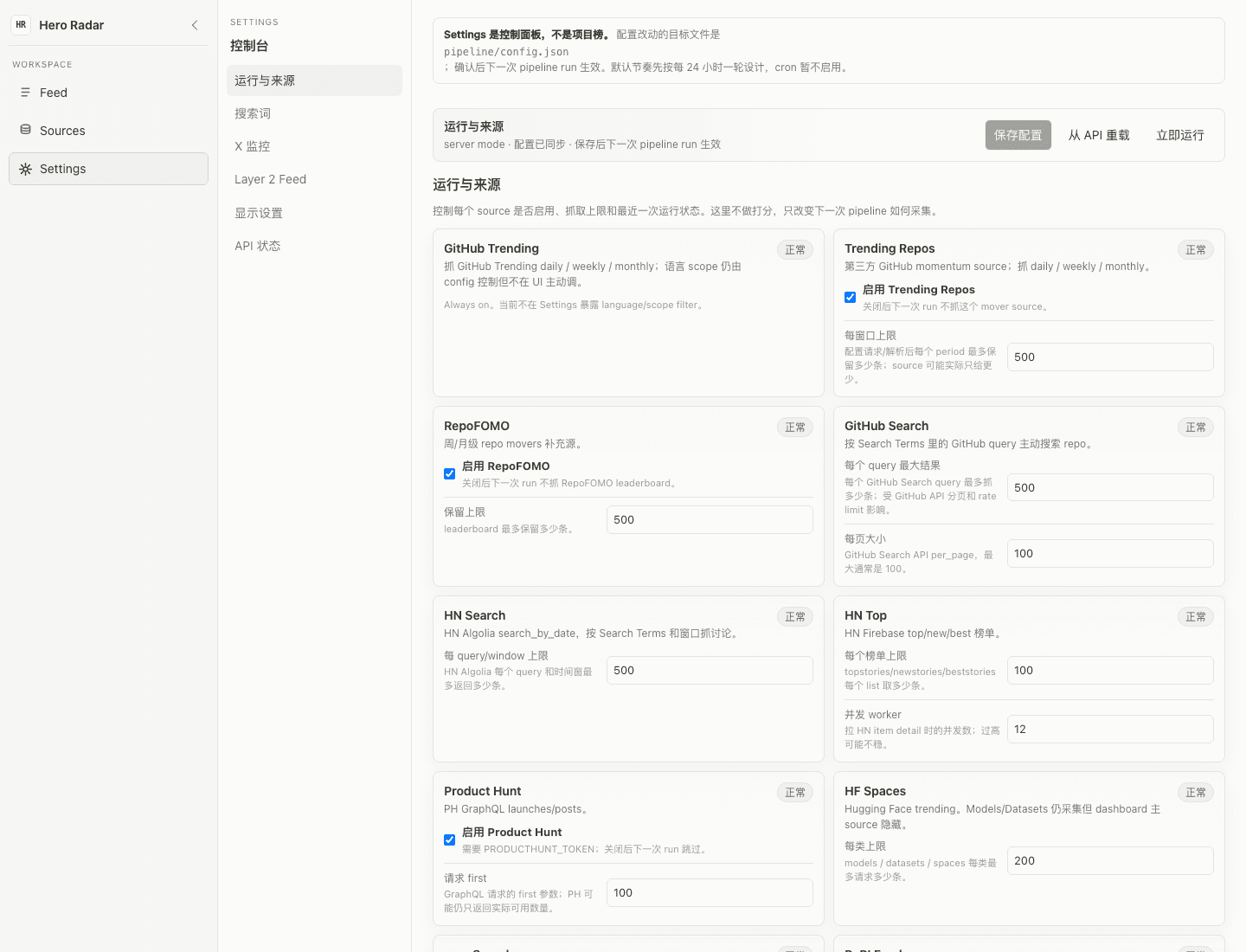
- ▸Problem: AI product shifts become obvious too late if you only watch leaderboards or news. The useful signal is often early acceleration, alias chains, package activity, and cross-source resonance.
- ▸Solution: A local intelligence dashboard that aggregates GitHub, HN, Product Hunt, Hugging Face, npm, PyPI, X, and other public sources into a candidate pool and daily opportunity feed.
- ▸AI workflow: Uses deterministic grouping and recall-first rules before a bounded Layer 2 scoring investigator reviews candidates with limited tools, schema checks, confidence, caveats, and Chinese deep-dive briefs.
- ▸Validation: Built around backtests for OpenClaw, Hermes Agent, and Claude Code; current records cite 28K+ raw items across 15 signal sources. View read-only demo →
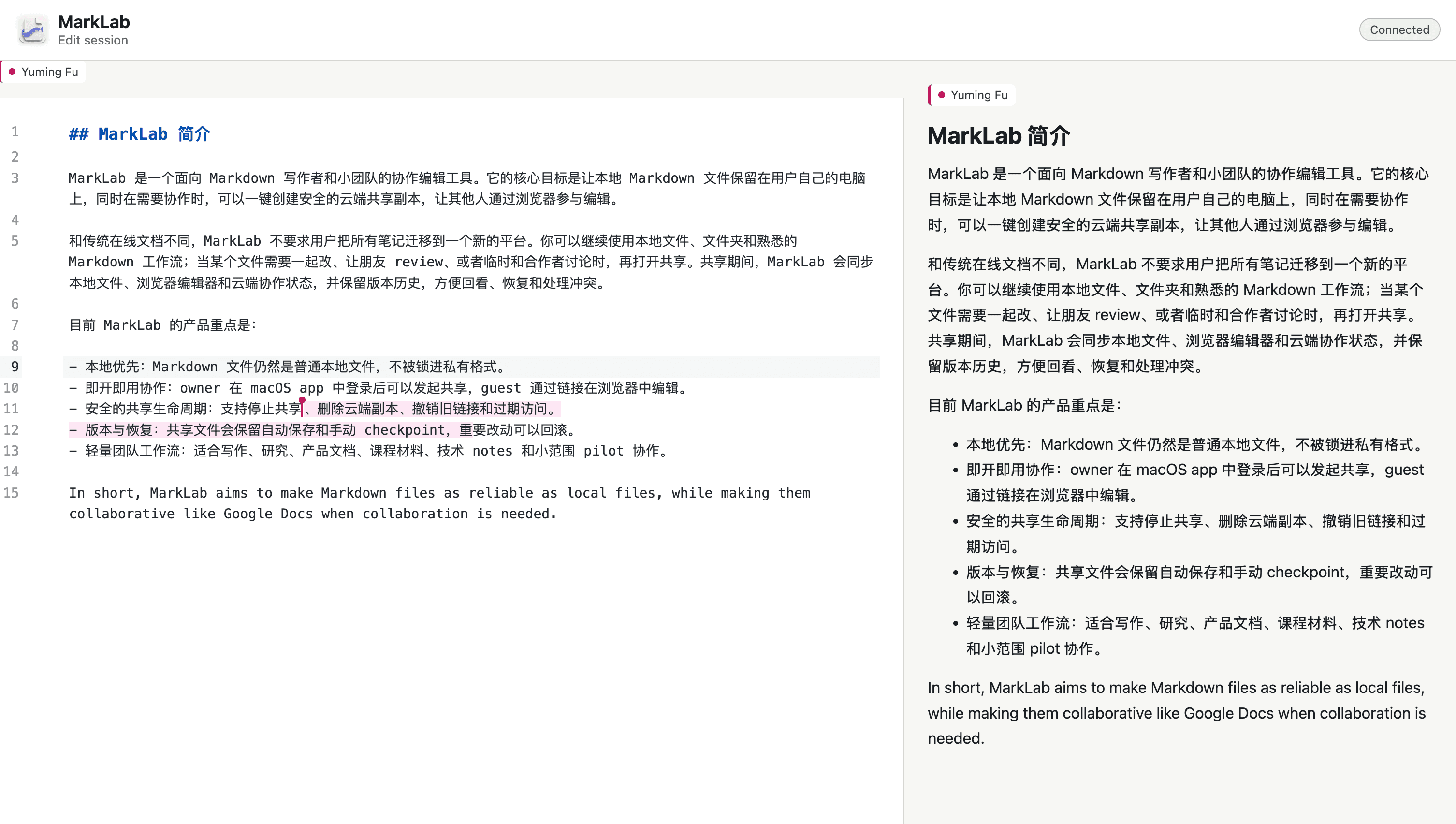
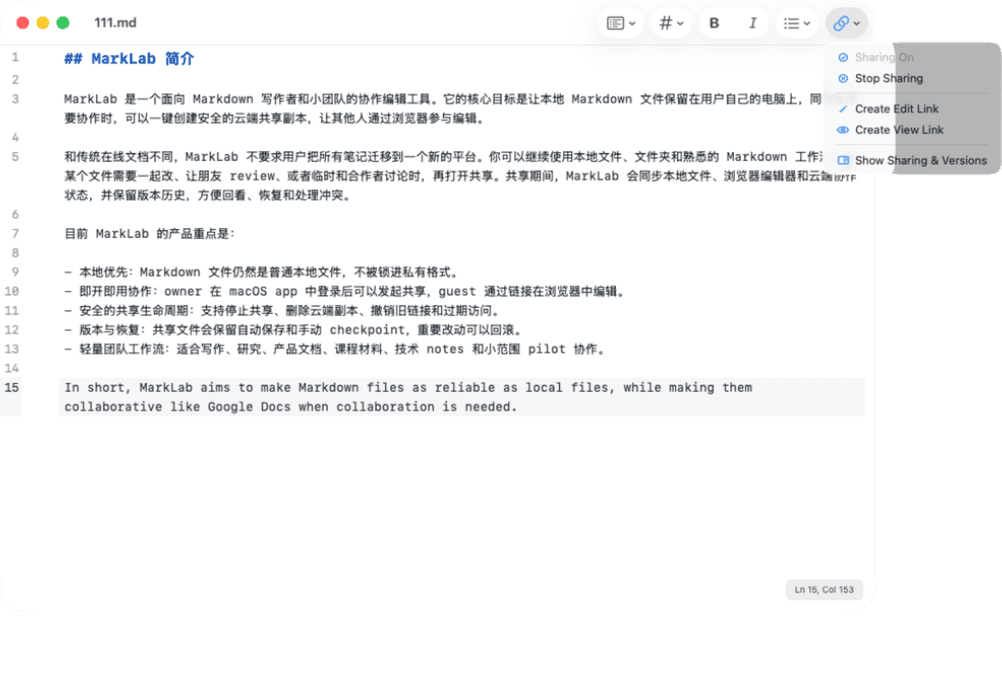
MarkLab — Local-First Markdown Collaboration
MarkLab is a local-first Markdown collaboration tool. The user's .md file stays as the working copy on disk while MarkLab adds live /collab editing, native app sharing, browser and app collaborators, view-only links, access control, online version history, and conflict review around that same file.
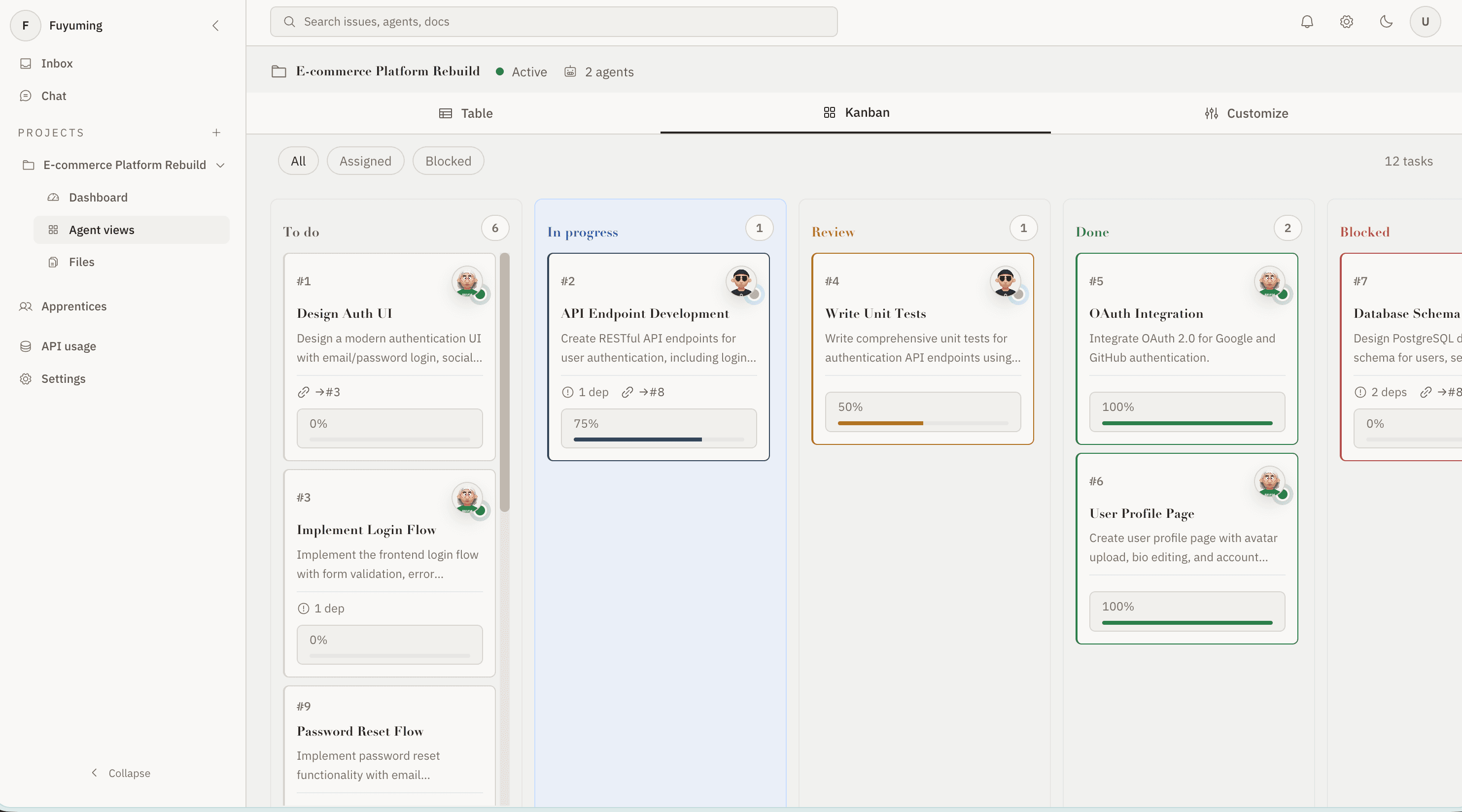
AI Agent Management Platform — A Feishu for Agents
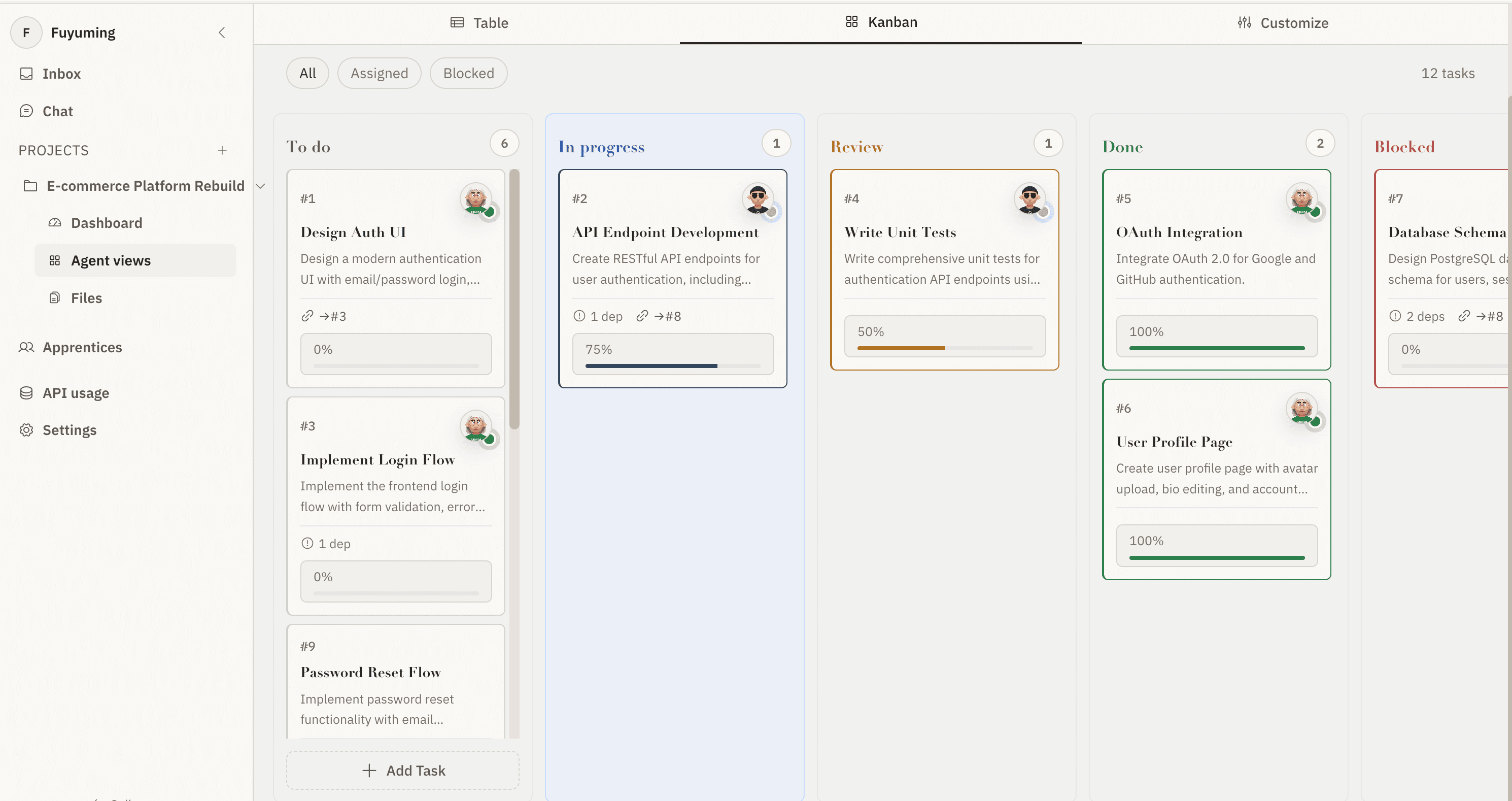
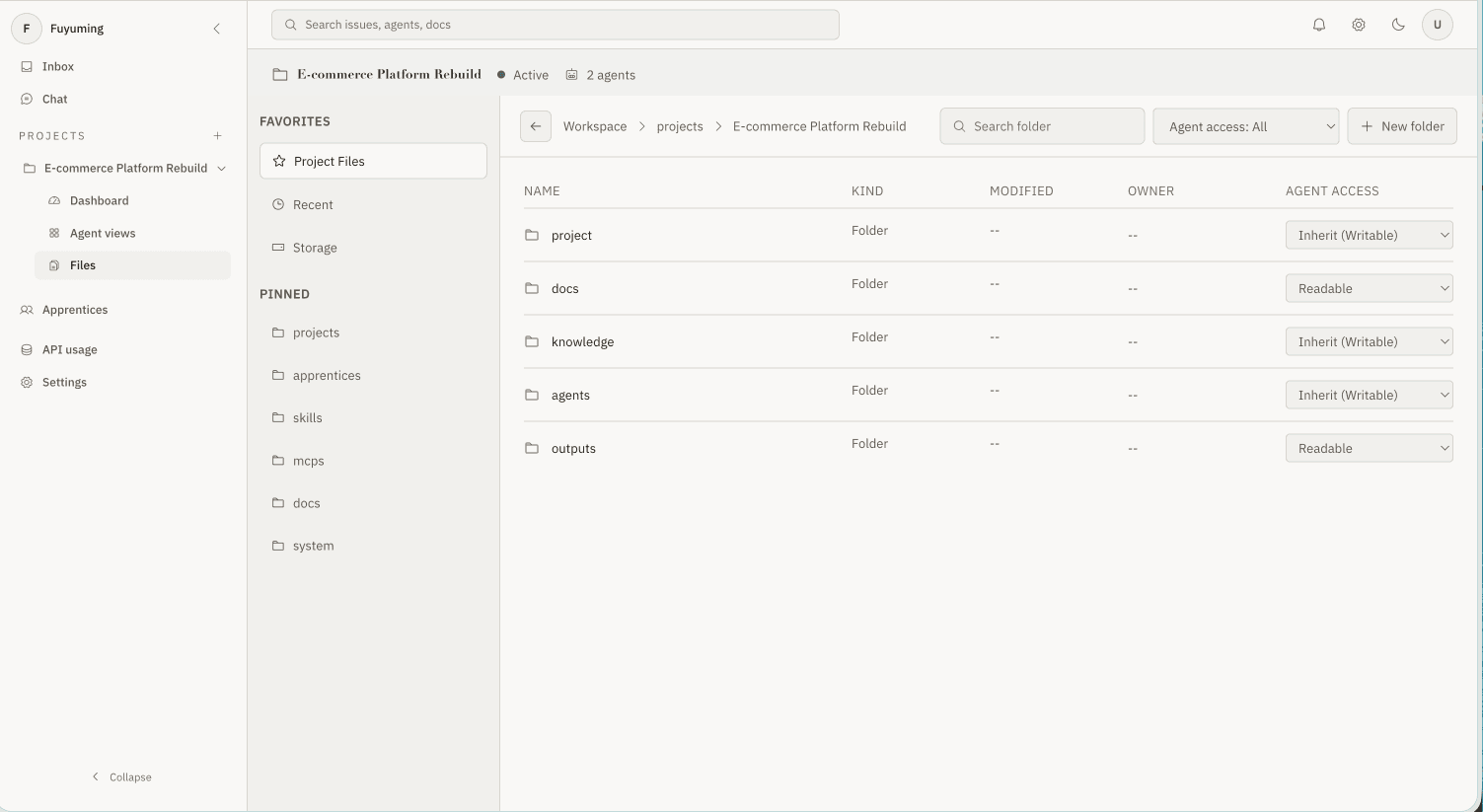
Paused Prototype- ▸Thesis: Vibe coding moves from execution to management once multiple agents run in parallel. The missing layer is not another chat box, but a management surface for attention, visibility, and role quality.
- ▸Problem: Chat works for one agent, but 3-5 long-running agents force the user to schedule, track, review, and remember state manually. The cognitive cost grows faster than the work output.
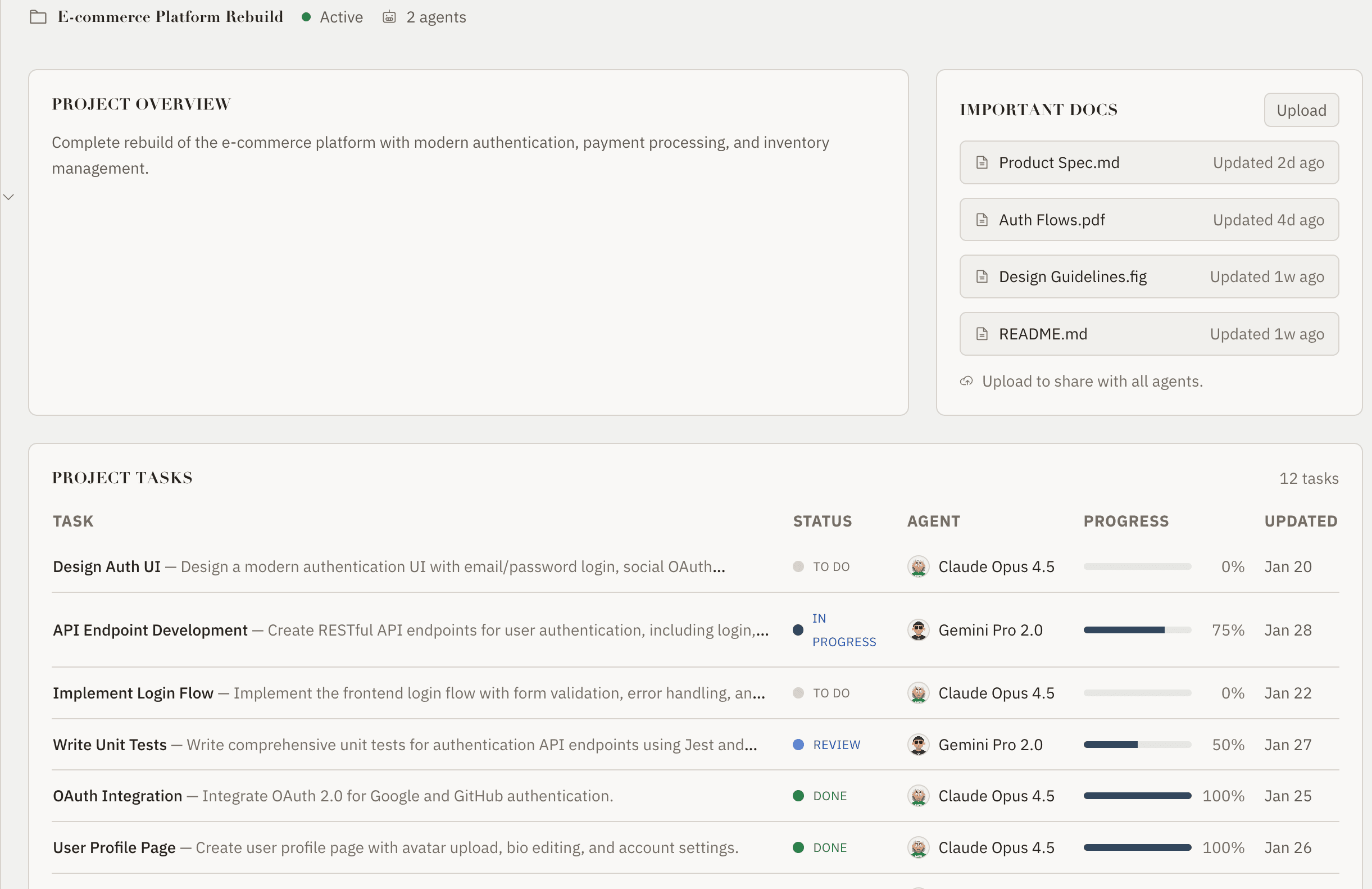
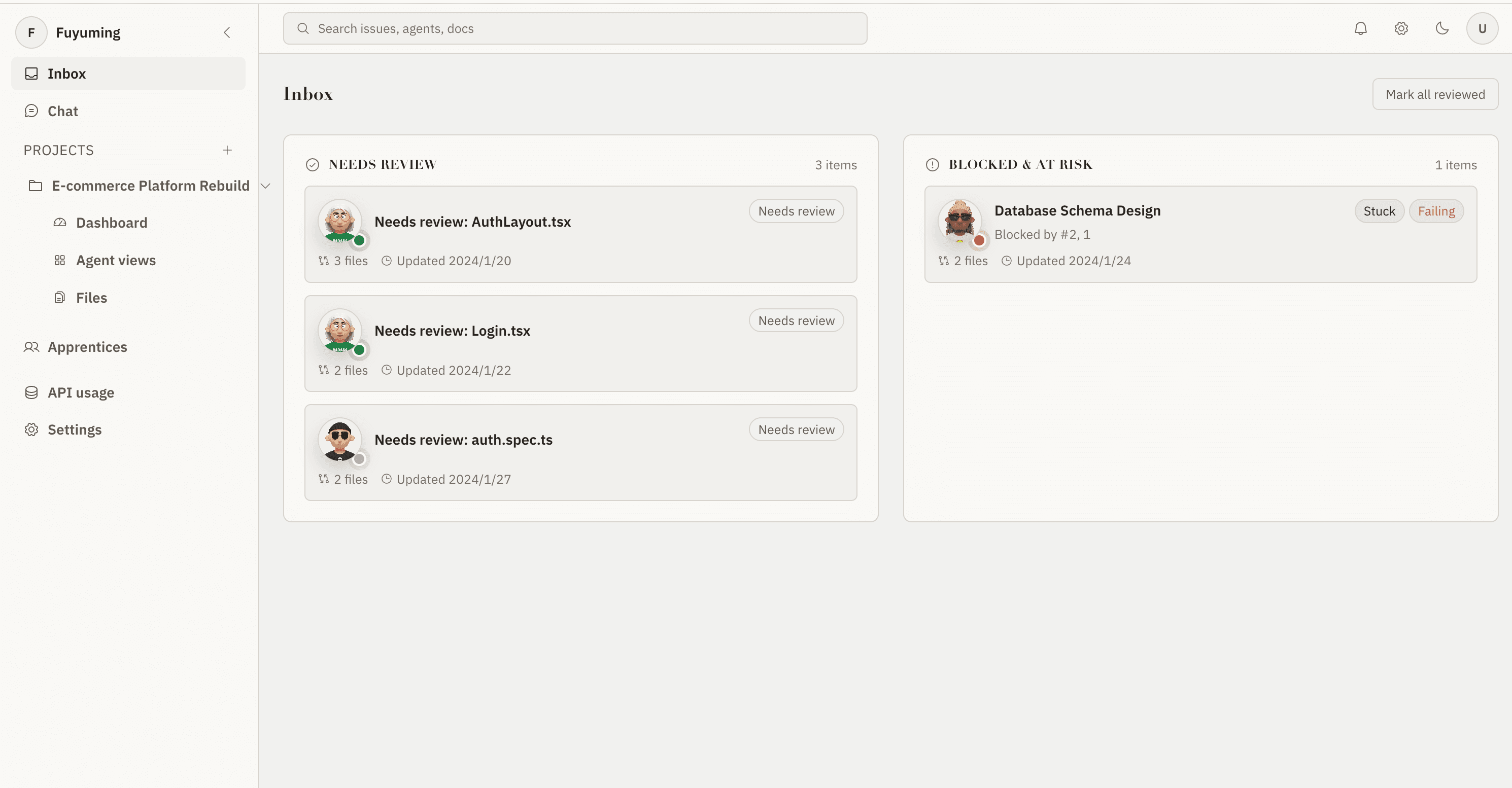
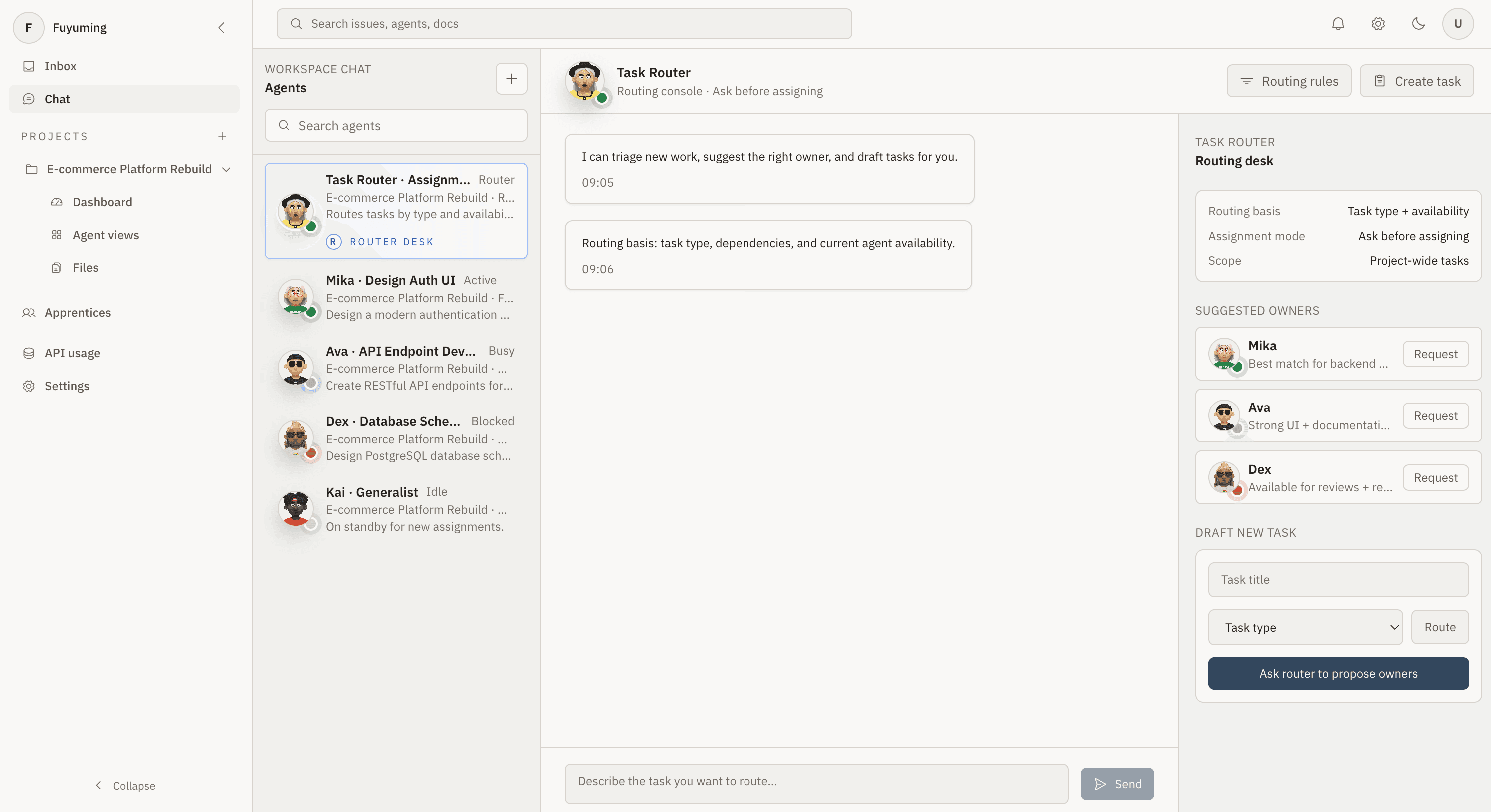
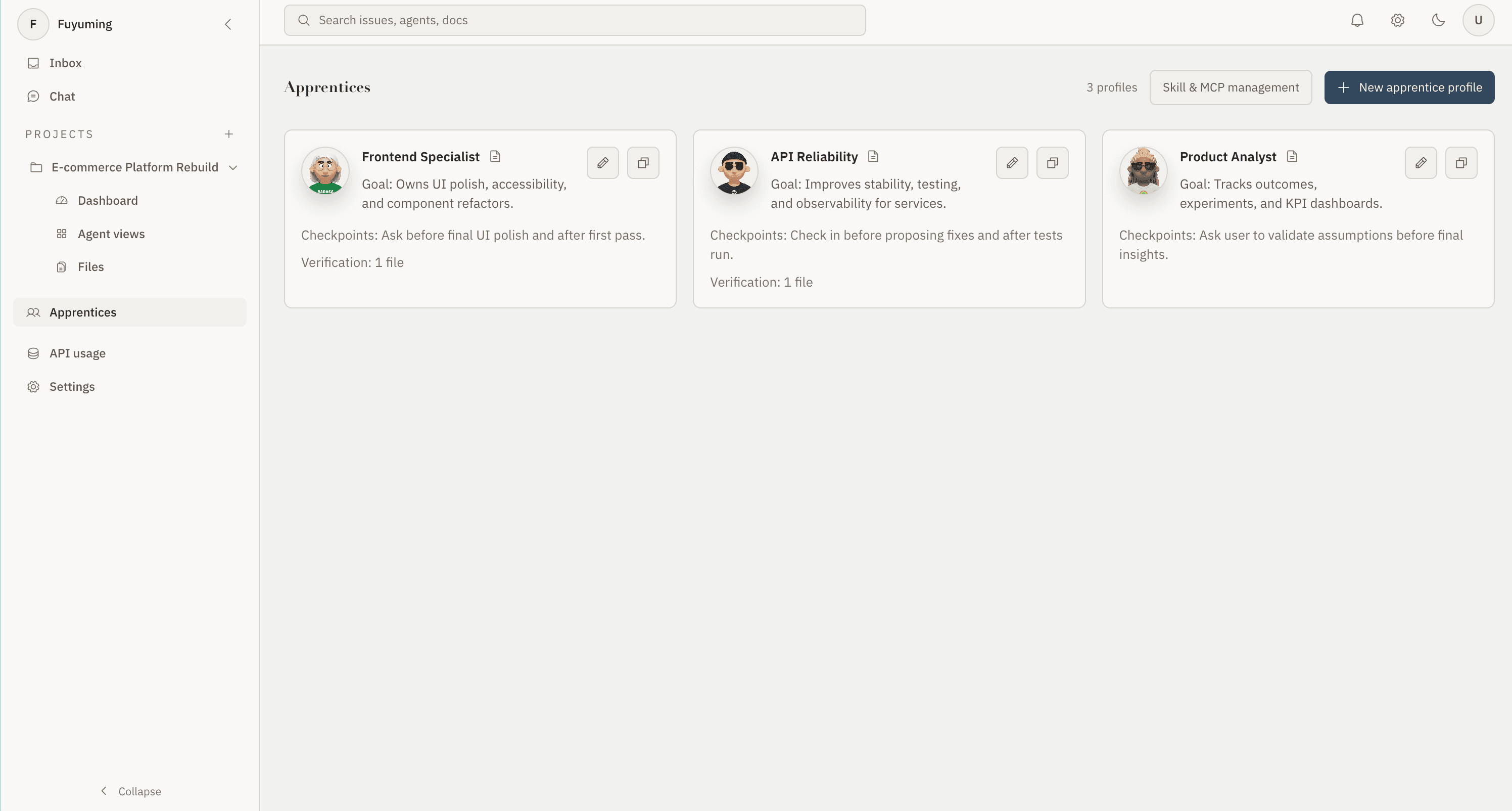
- ▸Product: A familiar team-management UI for agents: table and kanban views, project dashboard, inbox for human attention, task routing chat, shared files, permissions, and role/apprentice feedback loops.
- ▸Learning: Management is not workflow automation. The useful shape is a flexible coordination layer where CLI execution can stay in the terminal while strategy, review, context, and handoff become visible to humans and agents.
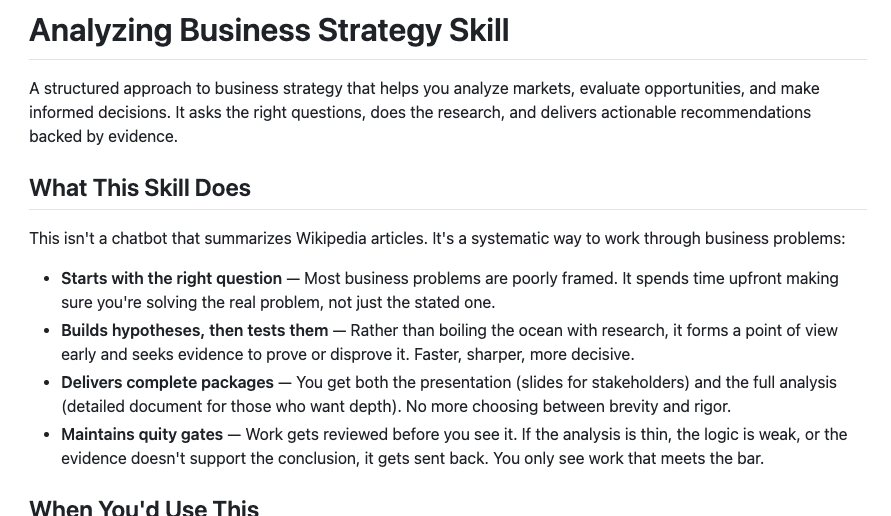
- ▸Inspiration: Wanted to explore whether a team of autonomous AI agents could replicate a consulting workflow end-to-end — problem framing, hypothesis generation, evidence gathering, and structured output — without human hand-holding at each step.
- ▸Approach: Multi-agent orchestration with progressive disclosure — a lead agent decomposes the problem and routes sub-tasks to specialist agents. Outputs pass through a quality gate before surfacing, so thin reasoning or unsupported conclusions get rejected before you see them.
- ▸How: Built as a Claude Code skill with a skill evaluation loop, structured prompt chaining, and output templating to produce both a stakeholder presentation and a detailed analysis document from a single input.
- ▸Dev experience: Orchestration quality varies a lot by task type — well-scoped analytical questions work well, but open-ended or ambiguous inputs cause agents to drift. Task nature matters more than prompt engineering.
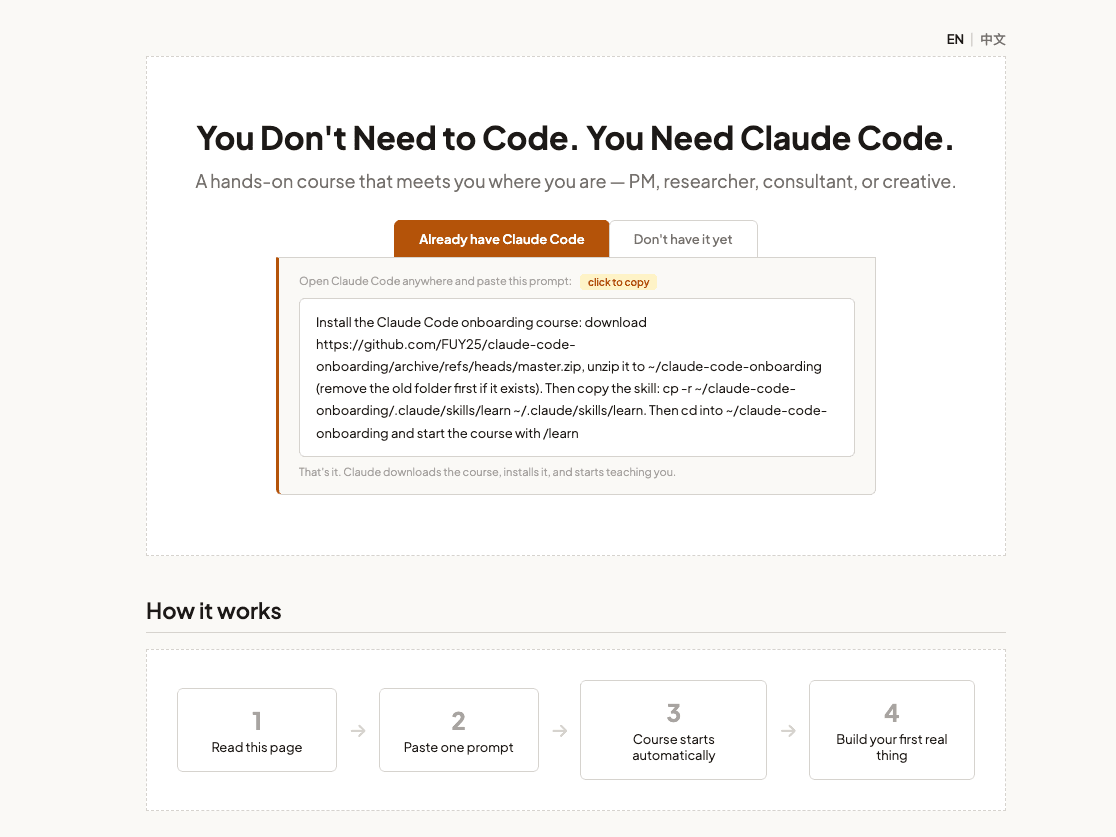
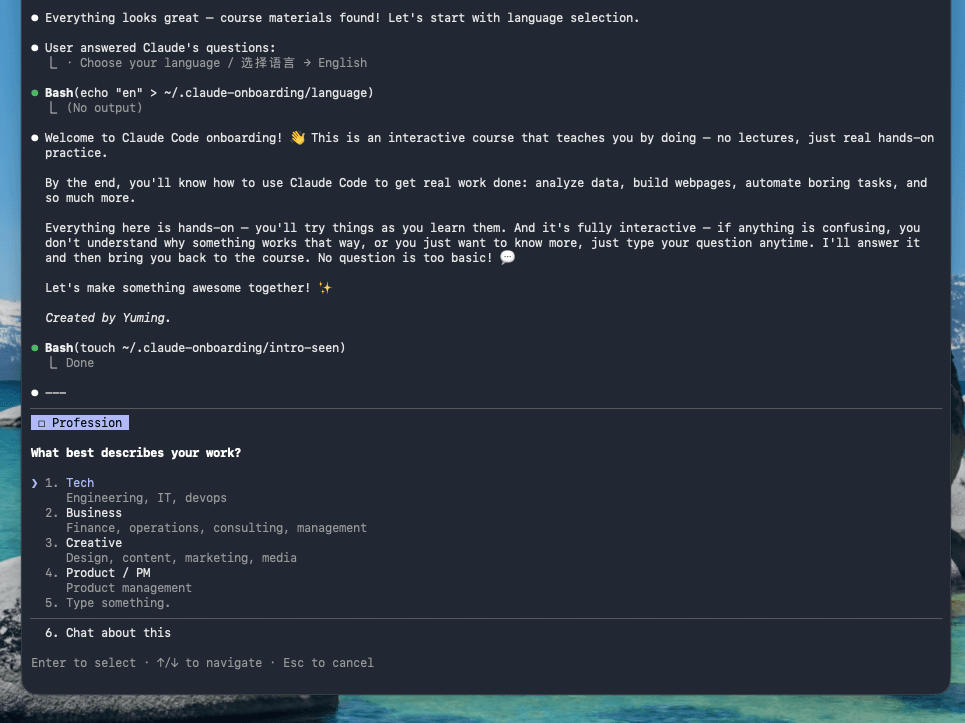
- ▸Problem: Most people who install Claude Code freeze at the terminal — videos are scattered across creators, docs are long, and nothing ties it together into a learnable sequence.
- ▸Solution: A course that runs inside Claude Code itself — Claude Code teaches you Claude Code. One install prompt, no platform, no video. Adapts to your profession and experience level from the first question.
- ▸How: Built as a Claude Code skill with FSM routing — 24 lesson files lazy-loaded from disk to stay within context limits, state persisted atomically across sessions, 38 profession-matched sample files for real practice.
- ▸Dev experience: First real Claude Code project — built entirely with Claude Code, which made the whole thing nicely self-referential. Open source, bilingual EN/ZH. GitHub →
- ▸Problem: Keeping up with AI thought leaders is scattered across YouTube, X, blogs, and podcasts — high switching cost, lots of noise.
- ▸Solution: An aggregator that auto-discovers and curates the latest content from AI thinkers into one personalized feed — no clickbait, no algorithm randomness.
- ▸How: Web scraping + content curation pipeline, built as a Minimax agent with conversational interface.
- ▸Dev experience: First time vibe coding — iterated within Minimax, cross-checked ideas with ChatGPT and Claude. Honest take: not a deep pain point since switching cost from individual platforms is real, but a well-packaged aggregator with a strong concept.